
The First Impression: Why Modern Curb Appeal Matters
Imagine pulling into your driveway after a long day at work. You look up, and instead of seeing a house that feels stuck in the previous decade, you see a sleek, inviting sanctuary that reflects your personal style. That feeling of pride isn’t just about vanity; it is about creating a cohesive environment that starts the moment you step out of your car. Modern exterior curb appeal is more than just a fresh coat of paint. It is a strategic blend of minimalism, high-quality materials, and intentional design that tells a story of sophistication and warmth.
SUBMIT YOUR DETAILS FOR
In the world of real estate, we often hear that first impressions are everything. But for a homeowner, curb appeal is also about your daily experience. Modern design has evolved from the cold, clinical looks of the early 2000s into something much more “organic modern”—a style that embraces natural textures like wood and stone while maintaining clean, sharp lines. If you are plaing a transformation, you are in the right place. Let’s walk through the steps to plan a modern exterior that will make your home the envy of the neighborhood.
1. Start with the “Less is More” Philosophy
The hallmark of modern architecture is simplicity. If your current exterior is cluttered with ornate shutters, busy brick patterns, and a collection of mismatched lawn ornaments, the first step in your plaing process is a “visual declutter.” Modern design thrives oegative space. This means allowing the structure of the house to speak for itself without being drowned out by uecessary details.
When plaing, look at the silhouette of your home. Are there heavy railings that could be replaced with thin black steel or glass? Could those traditional shutters be removed to let the window frames shine? By simplifying the facade, you create a canvas where your intentional design choices—like a bold front door or a stuing light fixture—can actually stand out. Remember, in the modern world, every element must have a purpose.
2. Mastering the Modern Color Palette
Gone are the days when every house on the block had to be beige or cream. Modern curb appeal often plays with high contrast or moody, monochromatic schemes. One of the most popular trends right now is the “Modern Farmhouse” or “Industrial Chic” look, which utilizes deep charcoals, matte blacks, and crisp whites.
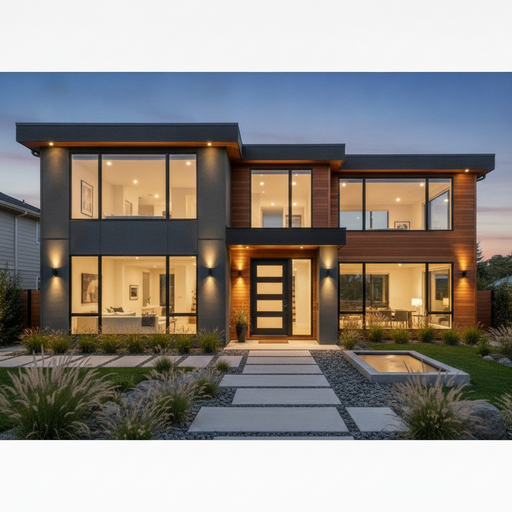
However, a truly modern palette needs a “warm” element to prevent it from feeling sterile. This is where natural wood accents come in. Think about a cedar-planked ceiling on your porch or a mahogany front door. The orange and brown tones of the wood pop beautifully against dark gray or black siding. When plaing your colors, consider the “60-30-10” rule: 60% of your primary color (siding), 30% secondary color (trim/garage), and 10% accent color (front door or hardware).
3. Strategic Landscaping: The Architecture of Plants
Traditional landscaping often involves “foundation planting”—shrubbery huddled against the house to hide the concrete base. Modern landscaping, however, treats plants like living sculptures. Instead of messy, flowering bushes that require constant pruning, modern plaing focuses on structure and repetition.
Consider using ornamental grasses like Mexican Feather Grass or Blue Oat Grass. These provide movement and texture while maintaining a clean look. Boxwood hedges can be trimmed into sharp geometric squares or spheres to provide a sense of order. Another key element is “hardscaping.” Use large-format concrete pavers with gaps filled with Mexican beach pebbles or creeping thyme. This creates a rhythmic, intentional pathway to your entrance that feels like a modern art gallery.
4. Lighting: The Nighttime Transformation
Many homeowners overlook lighting during the plaing phase, but it is the secret ingredient that makes a home look expensive. Modern exterior lighting isn’t just about a single porch light. It’s about layers. You want to highlight the architectural features of your home even after the sun goes down.
Look for fixtures with clean, geometric lines. Long, vertical LED sconces flanking the front door can make an entrance feel grand. Additionally, consider “up-lighting” for your trees or “wash lighting” for textured stone walls. Low-voltage path lights hidden within your landscaping can guide guests to your door while adding a soft, luxurious glow. Smart lighting systems allow you to dim these lights, creating the perfect ambiance for different times of the night.
5. The Jewelry of the Home: Hardware and Finishes
If the siding and roof are the “outfit” of your home, the hardware is the jewelry. This is where small changes make a massive impact. Old, brass-plated door handles and flimsy plastic house numbers can instantly date a renovation. To achieve a modern look, look for finishes in matte black, satiickel, or brushed gold.
The house numbers should be large, bold, and in a sans-serif font. Floating house numbers that sit slightly off the wall create interesting shadows and a 3D effect. Your mailbox should also follow suit—ditch the traditional post for a sleek, wall-mounted or pedestal-style box that matches your home’s aesthetic. These small details signal that every inch of the property has been thoughtfully curated.
6. Creating Functional Modern Spaces
Modern curb appeal isn’t just to be looked at; it’s to be lived in. Many modern designs are reclaiming the front yard as a social space. Instead of a hidden backyard deck, consider a small, modern front porch seating area. Two sleek Adirondack chairs or a simple concrete bench near the entryway can make the home feel welcoming and lived-in.
This “social front yard” concept often involves low-profile fencing or retaining walls made of Corten steel or smooth-poured concrete. These elements define the space without closing it off from the neighborhood, striking the perfect balance between privacy and community engagement.
7. Sustainability as a Style Statement
In the modern era, “green” is the new black. Sustainable choices are no longer just about the environment; they are a key part of the modern aesthetic. Xeriscaping (landscaping that requires little to no irrigation) is incredibly popular in modern design. It uses native plants, rocks, and gravel to create a beautiful, low-maintenance yard.
You might also consider permeable pavers for your driveway, which allow rainwater to soak into the ground rather than ruing off into the street. Not only are these choices better for the planet, but they also offer a clean, minimalist look that aligns perfectly with modern design principles. Plaing for sustainability ensures your curb appeal remains timeless and functional for years to come.
Conclusion: The Journey to a Modern Masterpiece
Plaing a modern exterior transformation is an exciting journey that requires a bit of bravery. It involves stripping away the “safe” and traditional to embrace bold lines, deep colors, and intentional minimalism. By focusing on a cohesive color palette, structural landscaping, and high-quality hardware, you can transform a standard house into a modern masterpiece.
Remember, curb appeal is an investment—not just in your home’s market value, but in your daily happiness. Every time you turn the corner and see your home standing tall with its sleek new look, you’ll know that the plaing and effort were worth it. Start small, have a clear vision, and watch as your home becomes the talk of the town for all the right reasons.