
The Call of the Sea: Why Your Coastal Home Deserves a Modern Makeover
Imagine standing on your balcony as the sun begins to dip below the horizon, casting a golden hue over the rolling waves. You feel the salty breeze against your skin, but as you glance back at your home, you notice the weathered siding, the chipped paint from years of salt spray, and a design that feels stuck in the previous decade. Coastal homes face a unique set of challenges, from harsh humidity to corrosive salt air, but they also offer the most rewarding canvas for a modern architectural transformation.
Modern coastal renovation isn’t just about giving a house a fresh coat of paint; it’s about a fundamental shift in how we interact with the shoreline. It’s about merging sleek, minimalist aesthetics with the rugged durability required by the elements. In this guide, we will walk through the journey of reimagining your coastal exterior, turning a tired beach house into a contemporary masterpiece that stands the test of time and tide.
SUBMIT YOUR DETAILS FOR
Choosing Materials That Defy the Elements
When you live by the ocean, the environment is your biggest critic. Traditional wood siding might look charming for a season, but the constant moisture often leads to rot and high maintenance costs. Modern renovation focuses on “hard” materials that offer a sophisticated look without the constant upkeep.
Fiber cement siding, often known by the brand James Hardie, has become a staple in modern coastal design. It mimics the texture of wood but is engineered to resist salt, wind, and humidity. For a truly modern look, many homeowners are opting for smooth panels with recessed joints, creating a clean, geometric facade. Another rising star is thermally modified wood, which undergoes a high-heat process to make it resistant to decay and insects, allowing you to keep that warm wood aesthetic without the traditional headaches.
Don’t forget the roof. While asphalt shingles are common, a standing-seam metal roof is the gold standard for a modern coastal home. Not only does it provide a sleek, industrial edge, but its wind resistance is unparalleled, and it reflects solar heat, keeping your home cooler during those intense summer afternoons.
The Evolution of the Coastal Color Palette
For years, the “coastal look” was synonymous with navy blue shutters and bright white trim. While classic, the modern movement has moved toward a more sophisticated and grounded palette. Think of the colors you see on a stormy day at the beach: charcoal greys, sandy beiges, deep moss greens, and crisp, matte blacks.
A popular modern strategy is the monochromatic approach. Using different shades of the same grey or off-white can create a sense of depth and architectural interest without being overwhelming. Dark window frames—specifically in black or bronze—provide a stuing contrast against lighter siding, framing the view of the ocean like a piece of fine art. These bold accents help define the clean lines that are the hallmark of modern architecture.
Blurring the Lines: Windows and Natural Light
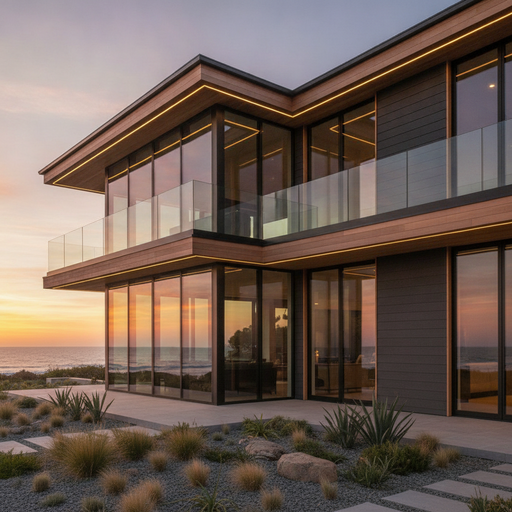
The primary reason we live near the water is the view. A modern exterior renovation should prioritize transparency. Old, small, double-hung windows are being replaced by massive, floor-to-ceiling glass walls and sliding glass doors that disappear into the walls. This creates a “liminal” space where the interior living room and the exterior deck become one continuous environment.
However, glass in a coastal zone needs to be smart. Impact-resistant glass is a must-have for storm protection, but it also provides excellent sound insulation against the crashing waves and wind. Furthermore, Low-E coatings are essential to prevent the interior of your home from becoming a greenhouse. By choosing high-performance glazing, you can enjoy the panoramic views of the Atlantic or Pacific without sacrificing energy efficiency or safety.
Outdoor Living: The New Heart of the Home
In a modern coastal renovation, the “exterior” isn’t just the walls of the house; it’s the entire footprint of the property. Modern design treats the outdoor space as a primary living area. This means moving beyond a simple wooden deck to a multi-tiered outdoor experience.
- Frameless Glass Railings: Nothing ruins an ocean view like a bulky wooden railing. Frameless glass systems provide safety without obstructing the horizon, making your deck feel like it’s floating over the water.
- Integrated Fire Features: Coastal nights can get chilly. A built-in linear fire pit made of concrete or natural stone creates a focal point for evening gatherings and adds a high-end resort feel to your backyard.
- Outdoor Kitchens: Modern coastal living is synonymous with entertaining. Stainless steel cabinetry and marine-grade appliances allow you to cook full meals while enjoying the sea air.
- Sustainable Decking: Composite decking materials, like those from Trex or Azek, are preferred over wood because they don’t splinter, warp, or require staining—essential qualities when your deck is constantly exposed to sun and salt.
The Role of Native Landscaping
A modern renovation isn’t complete without a landscape that complements the architecture. The “manicured lawn” look is being replaced by xeriscaping and native coastal plantings. Native grasses like Sea Oats or Muhly Grass add movement and texture, swaying beautifully in the wind while requiring very little water.
Incorporate hardscaping elements like oversized concrete pavers, gravel paths, and weathered steel (Corten) planters. These materials age gracefully in the coastal environment, developing a beautiful patina that tells the story of the home’s relationship with the sea. This approach is not only aesthetically modern but also environmentally responsible, reducing the need for chemical fertilizers and excessive irrigation.
Smart Lighting: Highlighting the Architecture
As the sun sets, your modern coastal home should transform into a glowing beacon. Modern exterior lighting is subtle and intentional. Instead of bright, blinding floodlights, use “up-lighting” to highlight the texture of your siding or the silhouette of a palm tree.
Linear LED strips hidden under stair treads or along the underside of roof overhangs provide a futuristic glow that defines the home’s shape. Always choose “Dark Sky” compliant fixtures to minimize light pollution, ensuring that you and your neighbors can still enjoy the stars over the ocean. In coastal areas, it’s also important to use turtle-friendly amber lighting if you are near nesting beaches, showing that modern luxury can coexist with local wildlife conservation.
Conclusion: A Sanctuary for the Modern Soul
Renovating the exterior of a coastal home is an investment in both lifestyle and longevity. By moving away from dated “beach shack” tropes and embracing the clean lines, durable materials, and integrated outdoor spaces of modern design, you create a sanctuary that honors its environment.
The journey from a weathered house to a modern coastal masterpiece is one of refinement. It’s about stripping away the uecessary and focusing on what truly matters: the light, the air, and the incredible view. Whether you are looking to increase your property value or simply want a home that reflects your personal style, a modern exterior renovation ensures that your coastal retreat remains a place of beauty and peace for decades to come.