
The Soul of Your Home Begins at the Curb
Imagine standing at the edge of your driveway, looking at a blank canvas. That canvas is your home, and the materials you choose for its exterior are the strokes of paint that will define its personality for decades. Choosing custom exterior materials is one of the most exhilarating—and admittedly, overwhelming—parts of any home building or renovation journey. It is not just about picking a color you like; it is about finding the perfect marriage between aesthetic beauty, structural integrity, and the unique demands of your local environment.
SUBMIT YOUR DETAILS FOR
For many homeowners, the exterior is an afterthought compared to the kitchen island or the master suite. However, the exterior is the “skin” of your sanctuary. It protects you from the elements, keeps your energy bills in check, and serves as your first impression to the world. In this guide, we are going to walk through the world of custom exterior materials, moving beyond the standard vinyl siding into a realm of texture, durability, and timeless style.
Understanding the Impact of Climate on Your Choices
Before we dive into the beauty of cedar shakes or the sleekness of architectural metal, we have to talk about the silent partner in your design: the weather. Every material has a “comfort zone.” What works for a beach house in the Hamptons will likely fail for a cabin in the snowy peaks of the Rockies.
If you live in a coastal area, salt spray and high humidity are your primary enemies. Materials like natural wood might rot or warp quickly, whereas fiber cement or high-grade aluminum can withstand the corrosive air. Conversely, if you are building in a desert climate like Arizona, UV resistance is your top priority. Some paints and composites can fade or become brittle under the relentless sun. Always ask yourself: “Will this material look as good in ten years of my local weather as it does today in the showroom?”
The Timeless Elegance of Natural Stone
There is something undeniably grounded about a home wrapped in stone. It suggests permanence, strength, and a coection to the earth. Custom stone work allows for incredible variety—from the rugged, irregular shapes of fieldstone to the clean, sharp lines of ashlar-cut limestone.
Natural stone is a premium choice, and for good reason. It is virtually fireproof, resistant to pests, and requires very little maintenance. However, it is heavy and requires a skilled mason for installation. If you love the look but have a tighter budget or structural limitations, stone veneer is a fantastic alternative. Modern manufacturing has made it nearly impossible to distinguish high-quality veneer from the real thing, allowing you to get that “castle-like” feel without the weight or the price tag.
The Warmth and Texture of Wood and Engineered Wood
Wood is the “comfort food” of exterior materials. It brings an organic warmth that no other material can truly replicate. From the rustic charm of Western Red Cedar to the exotic durability of Ipe, wood allows a home to blend into its natural surroundings. It can be stained to show off the grain or painted in any color imaginable.
However, wood comes with a commitment. It needs to be sealed, stained, or painted every few years to prevent rot and insect damage. For those who love the look of wood but lack the time for maintenance, engineered wood (like LP SmartSide) or fiber cement (like James Hardie) is a game-changer. These materials are designed to mimic the texture of wood while being resistant to moisture, rot, and termites. They offer the best of both worlds: the “storytelling” aesthetic of timber with the “set-it-and-forget-it” ease of modern technology.
Modernity and Edge: The Rise of Architectural Metal
In recent years, we have seen a massive shift toward modern and industrial aesthetics. Metal is no longer just for warehouses or roofs; it has become a premier choice for custom residential walls. Aluminum, steel, and even copper panels are being used to create sleek, low-maintenance exteriors that look like they belong in an architectural magazine.
Metal is incredibly durable and recyclable, making it an eco-friendly option. It offers a unique play of light and shadow, especially when using corrugated or ribbed panels. One of the most interesting trends is the use of “weathering steel” (often called Corten), which develops a stable, rust-like appearance over time. This provides a striking, earthy orange-brown patina that never needs painting and only gets more beautiful as it ages.
The Versatility of Fiber Cement
If there is a “MVP” in the world of exterior materials, it is undoubtedly fiber cement. Composed of wood fiber, sand, and cement, this material is a chameleon. It can be molded into traditional lap siding, vertical boards, or large modern panels. It is fire-resistant, stands up to extreme temperatures, and holds paint significantly longer than traditional wood.
For a custom home, fiber cement allows you to play with different textures on different parts of the house. You might use smooth panels for the main body of a modern home and “wood-grain” shingles for the gables to add a touch of traditional craftsmanship. It is the perfect middle ground for the homeowner who wants high performance without sacrificing design flexibility.
Mixing and Matching: The 70/20/10 Rule
One of the biggest mistakes homeowners make is choosing only one material for the entire house. This can make a large home look flat or monotonous. The most stuing custom homes use a “palette” of materials. A helpful guideline is the 70/20/10 rule:
- 70% Primary Material: This is your base, usually something like fiber cement or brick that covers the majority of the surface area.
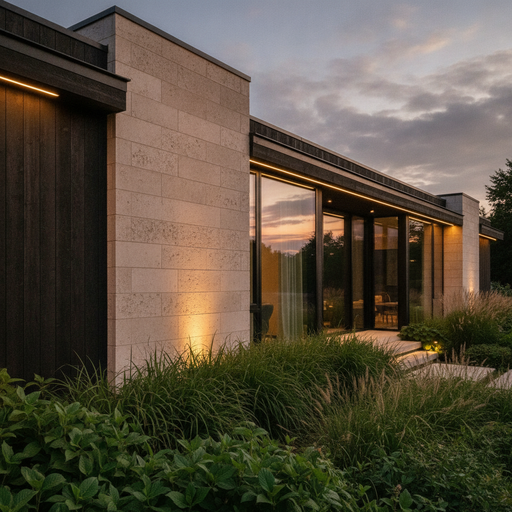
- 20% Secondary Material: This adds contrast. If your base is light-colored siding, your secondary material might be dark stone accents around the foundation or entry.
- 10% Accent Material: This is where you add the “wow” factor. Think of a natural wood ceiling under a porch, metal trim around the windows, or a pop of custom tile near the front door.
Sustainability: Choosing with the Future in Mind
In today’s world, custom selection also involves considering the environmental footprint. Sustainable choices include reclaimed wood, which tells a story of its previous life in a barn or factory, and recycled metal panels. Additionally, the “thermal mass” of materials like brick and stone can help regulate your home’s temperature, reducing the energy needed for heating and cooling.
When selecting your materials, ask about their lifespan. A material that lasts 50 years (like slate or brick) is often more sustainable than a cheaper material that needs to be replaced and sent to a landfill every 15 years. True luxury is not just about how it looks today, but how it respects the world it sits in.
Conclusion: Crafting Your Legacy
Selecting custom exterior materials is an investment in your home’s legacy. It is a decision that balances the practical needs of protection and efficiency with the emotional desire for beauty and self-expression. Whether you are drawn to the rugged reliability of stone, the sleek iovation of metal, or the cozy familiarity of wood, remember that your home is a reflection of your story.
Take your time with samples. Look at them in the morning light and the evening shadow. See how they feel against your hand. By carefully curating your exterior palette, you aren’t just building a house—you are creating a landmark that will welcome you home for years to come.