
The Unexpected Discovery of Sarah’s Best Investment
A few years ago, Sarah, a seasoned real estate investor, found herself burnt out. She had spent a decade managing a dozen single-family rentals and a small apartment complex. Between the leaking roofs, the midnight calls about broken toilets, and the constant turnover of tenants who treated her properties like disposable hotel rooms, she was ready to quit. She wanted cash flow, but she didn’t want the headaches that came with being a traditional landlord.
SUBMIT YOUR DETAILS FOR
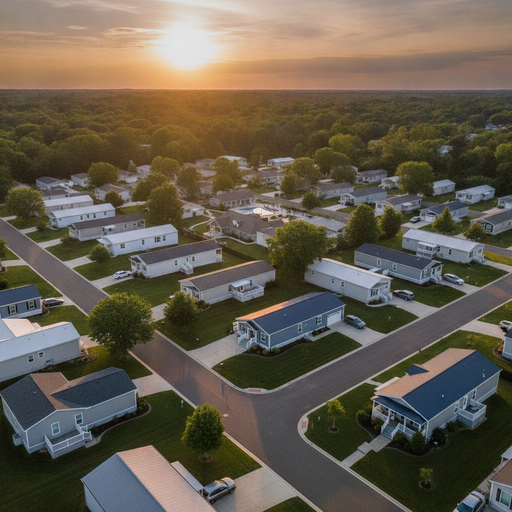
One afternoon, while driving through the outskirts of her city, she passed a neatly tucked-away community of manufactured homes. It wasn’t the stereotypical “trailer park” seen in movies; it was a quiet, cleaeighborhood with paved roads and mature trees. Curious, she started digging into the numbers. What she discovered changed her financial trajectory forever. She realized that mobile home parks (MHPs) weren’t just a niche investment—they were perhaps the most resilient and profitable asset class in the United States.
If you have ever dismissed the idea of owning a mobile home park, you might be missing out on a unique wealth-building machine. In this article, we will explore why mobile home park ownership is becoming the go-to strategy for high-net-worth investors and why it might be the right move for you.
1. The Beauty of Owning the Land, Not the Toilets
The most significant advantage Sarah discovered is the “Land-Lease” model. In a typical apartment building or rental house, the landlord owns everything: the walls, the appliances, the plumbing, and the roof. When a tenant’s water heater explodes at 3:00 AM, the landlord pays for it.
In a professional mobile home park, the dynamic is flipped. Most residents own their individual mobile homes and simply rent the “pad” or the “lot” from the park owner. As the owner, you are responsible for the infrastructure—the roads, the utility lines, and the common areas—but you are not responsible for the maintenance of the homes themselves. This drastically reduces your operational expenses. You aren’t fixing leaky faucets or replacing carpets every two years. You are essentially a horizontal landlord, collecting rent for the ground beneath the homes.
2. Unrivaled Tenant Stability and “Sticky” Occupancy
One of the biggest profit-killers in real estate is turnover. In the world of apartments, moving out is as easy as packing a few suitcases and handing over the keys. In a mobile home park, however, the tenants are remarkably “sticky.”
Moving a mobile home is a logistical and financial nightmare. It can cost anywhere from $5,000 to $10,000 to move a single-wide home from one park to another. Because of this high cost, most residents choose to stay for the long term. In fact, many mobile home parks see average tenancies of 10, 15, or even 20 years. This stability provides a predictable, steady stream of income that is hard to find in other rental sectors.
3. A Recession-Proof Moat: The Affordable Housing Crisis
We live in a time where housing prices are soaring, and the demand for affordable living spaces has never been higher. Mobile home parks represent the only non-subsidized form of low-income housing in the country. When the economy takes a downturn, people don’t stop needing a place to live; they simply look for more affordable options.
During a recession, high-end apartment complexes often see high vacancy rates as people downsize. Conversely, mobile home parks often see an increase in demand. It is a “counter-cyclical” asset. Whether the economy is booming or busting, there will always be a massive market for a clean, safe, and affordable place to call home. By owning a park, you are providing a vital solution to a national crisis while securing your own financial future.
4. The Power of Accelerated Depreciation
From a tax perspective, mobile home parks are a dream. While residential rental houses are depreciated over 27.5 years and commercial buildings over 39 years, the majority of the assets in a mobile home park consist of “personal property” and “land improvements” like roads, fences, and utility lines.
Through a process called Cost Segregation, park owners can often depreciate a large portion of the park’s value over a much shorter period—typically 15 years. This leads to massive tax write-offs in the early years of ownership, often allowing investors to offset a significant portion of their income. For an investor like Sarah, this meant she could keep more of her hard-earned cash in her pocket rather than handing it over to the IRS.
5. Limited Supply and High Barriers to Entry
Economics 101 tells us that when supply is limited and demand is high, value increases. It is almost impossible to build a new mobile home park today. Most local governments have changed zoning laws to prevent new developments, favoring luxury condos or retail spaces instead. This “NIMBY” (Not In My Backyard) attitude toward new parks has created a natural moat for existing owners.
Because you can’t just build a new park across the street, the existing parks become more valuable every year. You are essentially operating a “natural monopoly” in your local market. As long as you maintain a clean and safe environment, your “inventory” of lots will always be in high demand.
6. Lower Cost Per Unit
If you wanted to buy 50 units of an apartment complex in a decent neighborhood, you might be looking at an investment of $5 million to $10 million. However, you can often acquire a 50-lot mobile home park for a fraction of that price. The “cost per pad” is significantly lower than the “cost per door” in multi-family housing.
This lower entry point allows investors to achieve much higher Cap Rates (Capitalization Rates) and Cash-on-Cash returns. You can scale your portfolio much faster by acquiring land-lease communities than by trying to compete in the cutthroat world of high-rise apartments.
7. The Social Impact: Building Community
Beyond the numbers, there is a profound human element to mobile home park ownership. When Sarah bought her first park, she didn’t just see it as a line item on a spreadsheet. She saw it as a community. By investing in better lighting, repaving the roads, and adding a small playground, she transformed a neglected property into a place where families felt proud to live.
Owning a park gives you the opportunity to provide quality housing to seniors on fixed incomes, young families starting out, and hardworking individuals who have been priced out of the traditional housing market. There is a deep sense of satisfaction that comes from being a “good” owner who treats residents with respect and maintains a high-quality living environment.
Conclusion: Is It Time to Change Your Strategy?
The secret is out. Large institutional investors and private equity firms are moving into the mobile home park space at an unprecedented rate. They have recognized what Sarah found out: that the combination of low overhead, high demand, tax benefits, and recession resistance is too good to ignore.
Mobile home park ownership isn’t about “trailers”; it’s about the land, the infrastructure, and the massive demand for affordable living. While it requires a different management mindset than traditional real estate, the rewards—both financial and personal—can be extraordinary. If you are looking for a way to build a legacy of passive income while providing a much-needed service to society, it might be time to look closer at the ground beneath your feet.