
The Hidden Potential of the Humble Ranch
Imagine walking down a quiet suburban street. You see the usual sights: neatly trimmed hedges, white picket fences, and the unmistakable silhouette of the American ranch-style home. For decades, the ranch house—or “rambler”—has been the backbone of the American dream. Characterized by its single-story layout, long, low roofline, and open floor plan, it was designed for simplicity and accessibility. However, over time, many of these architectural gems have fallen into a bit of a “time warp,” looking more like relics of the 1970s than the modern sanctuaries they could be.
SUBMIT YOUR DETAILS FOR
I remember visiting a friend who had just purchased a 1964 ranch. Inside, it was a mid-century modern masterpiece. But outside? It was a different story. Overgrown junipers blocked the windows, and a cracked concrete path led to a front door that seemed to hide behind layers of outdated shrubbery. The house felt heavy and closed off. This is a common struggle for ranch homeowners. How do you take a design that is inherently horizontal and “flat” and give it the vertical interest and modern edge it deserves? The answer lies not in a sledgehammer, but in the landscape.
Modern landscaping for ranch homes isn’t just about planting a few flowers; it’s about echoing the clean lines of the architecture while introducing textures and shapes that breathe new life into the property. It’s about creating a transition between the sidewalk and the front door that feels like a curated experience. Let’s dive into how you can transform your ranch home into a modern marvel.
Embracing the Horizontal Line
The most defining feature of a ranch home is its horizontality. While some might see this as a design challenge, modern landscaping views it as a strength. Instead of trying to fight the low profile of the house with tall, spindly trees that look out of place, modern design leans into the long lines.
Think about using low-profile retaining walls or long, linear garden beds. By using materials like poured concrete or smooth-faced stone, you can create “layers” in your yard. These layers follow the line of the house, creating a sense of rhythm. I often recommend using corten steel edging to create crisp, sharp borders. This adds a touch of industrial modernism while keeping the soil and mulch perfectly in place. When your landscaping mimics the architecture, the entire property feels cohesive and intentional.
The Power of Hardscaping and Geometry
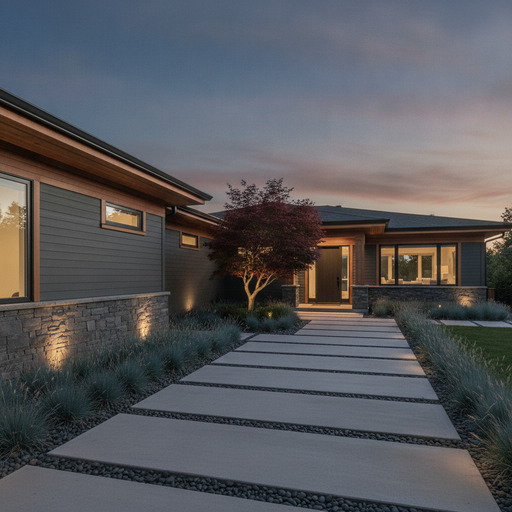
In a modern ranch landscape, the “hard” elements—paths, patios, and walls—are just as important as the plants. Traditional landscaping often relies on winding, “natural” paths. Modern style, however, thrives on geometry. Square or rectangular pavers set in a bed of dark river rock or pea gravel create a striking visual contrast that immediately screams “modern.”
Consider the “floating” walkway. By using large-scale concrete pavers separated by small gaps filled with grass or stones, you create a path that feels light and contemporary. This works exceptionally well for ranch homes because it breaks up the large expanse of the front lawn without adding uecessary bulk. It guides the visitor’s eye directly to the entrance, making the home feel more welcoming and structured.
Material Matters: Wood, Metal, and Stone
The materials you choose define the “temperature” of your home’s exterior. For a warm, organic modern look, horizontal slat fencing made of cedar or ipe wood is a game-changer. It provides privacy without feeling like a barricade. On the other hand, if you prefer a cooler, more minimalist vibe, dark gray slate or basalt can provide a stuing backdrop for vibrant green foliage. Mixing these materials—perhaps a stone path paired with a wooden accent wall near the porch—adds the depth that many ranch homes lack.
Minimalist Planting: Less is Often More
When it comes to the “green” part of your landscaping, the modern approach is often “quality over quantity.” Instead of a cluttered garden filled with twenty different species, focus on a limited palette of plants that offer strong shapes and textures. This creates a “gallery” effect where each plant is appreciated for its unique form.
- Ornamental Grasses: Varieties like Blue Oat Grass, Mexican Feather Grass, or Peisetum add movement and a soft texture that contrasts beautifully against hard concrete walls.
- Structural Plants: Agaves, Yuccas, or eveeatly trimmed Boxwood spheres provide a permanent architectural element that looks good year-round.
- The Statement Tree: Instead of a row of messy shrubs, choose one “hero” tree. A Japanese Maple with its delicate leaves or a multi-trunked Palo Verde can act as a living sculpture in your front yard.
One trick I love is mass planting. Instead of one lavender plant here and one there, plant a whole row of them. This repetition is a hallmark of modern design and creates a high-impact look that is surprisingly easy to maintain. It feels organized, calm, and sophisticated.
Lighting: The Evening Transformation
A modern ranch home should look just as good at 9:00 PM as it does at 9:00 AM. In fact, lighting is often the secret ingredient that takes a renovation from “nice” to “extraordinary.” Because ranch homes are low to the ground, they are perfect candidates for “uplighting.”
By placing small, discreet LED spotlights at the base of your structural plants or along the facade of the house, you create dramatic shadows and highlight the texture of the materials. Path lights should be sleek and minimalist—avoid the ornate “carriage-style” lanterns of the past. Instead, look for bollard lights with clean angles. Proper lighting ensures that your hardscaping and plants are highlighted, turning your yard into a multi-dimensional space after the sun goes down.
Sustainable and Low-Maintenance Living
Modern design isn’t just about looks; it’s also about functionality and sustainability. Many homeowners are moving away from the high-maintenance, water-guzzling green lawn. Xeriscaping—a style of landscaping that requires little to no irrigation—is a perfect fit for the modern ranch.
By replacing portions of your lawn with decomposed granite, boulders, and drought-tolerant native plants, you’re not only being environmentally conscious but also saving yourself hours of weekend yard work. Modernism is about simplifying life, and a landscape that thrives on its own is the ultimate luxury. Imagine spending your Saturday morning sipping coffee on the patio instead of pushing a lawnmower.
Creating an Outdoor Room
Because ranch homes are built on a single level, the transition between indoors and outdoors is often very short. You can exploit this by creating “outdoor rooms.” A modern deck or patio that sits at the same level as the interior floor makes the house feel much larger than it actually is.
Use large sliding glass doors to coect your living room to a backyard patio featuring a minimalist fire pit and comfortable, low-slung furniture. This extension of the living space is a core tenet of the mid-century modern philosophy that birthed the ranch home in the first place. When the landscape serves a purpose—whether it’s for dining, lounging, or meditating—it becomes an integral part of the home’s footprint.
Conclusion: Your Home, Reimagined
Transforming a classic ranch home with modern landscaping is one of the most rewarding home improvement projects you can undertake. It’s about stripping away the clutter, emphasizing the beautiful simplicity of the home’s architecture, and introducing materials that feel fresh and relevant today.
By focusing on clean lines, a deliberate choice of materials, and a curated selection of plants, you turn a dated exterior into a contemporary masterpiece. It doesn’t happen overnight, and it doesn’t require a million-dollar budget. It starts with a vision: seeing past the overgrown bushes and the old cracked sidewalk to the sleek, horizontal beauty that was there all along. Your ranch home isn’t just a house; it’s a canvas. It’s time to start painting.