
The Story Behind the Facade: Why Your Choice of Material Matters
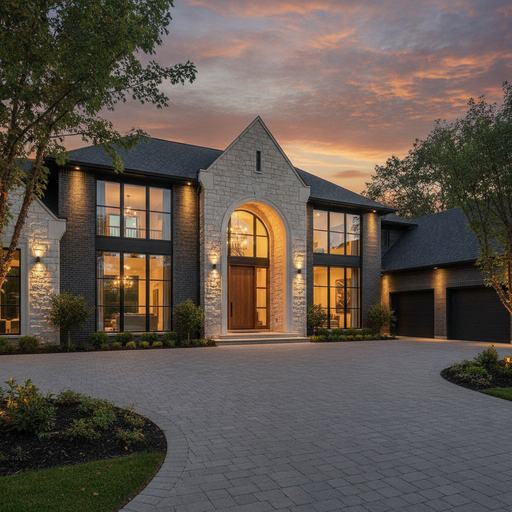
Imagine walking down a quiet suburban street at dusk. Most houses blend into a blur of beige siding and standard shingles. But then, you see it—a home that stops you in your tracks. The walls are a rich tapestry of deep crimson bricks, accented by rugged, hand-hewn limestone that seems to glow in the fading light. This isn’t just a house; it’s a statement of permanence and artistry. This is the power of custom exterior brick and stone.
SUBMIT YOUR DETAILS FOR
Choosing the exterior of your home is much like choosing the clothes you wear for a first impression that lasts a lifetime. For centuries, brick and stone have been the “gold standard” of construction, not just for their legendary durability, but for their ability to tell a story. Whether you are building your dream home from the ground up or plaing a major renovation, understanding how to manipulate these raw materials into custom concepts can elevate your property from “standard” to “spectacular.”
The Timeless Elegance of Natural Stone
Stone is perhaps the oldest building material known to man, yet it never feels dated. The beauty of stone lies in its imperfection. No two rocks are exactly alike, which means your home’s exterior will be a unique work of art. When we talk about custom stone concepts, we aren’t just talking about slapping some rocks on a wall; we’re talking about the intentional selection of type, cut, and color.
Fieldstone vs. Ledgestone: Finding Your Narrative
If you’re aiming for a “European countryside” or “rustic farmhouse” vibe, fieldstone is your best friend. These are typically rounded or irregularly shaped stones that look as though they were gathered from a local meadow. They provide a sense of history and organic growth. On the other hand, if your heart leans toward the modern and sleek, ledgestone offers a linear, stacked appearance. It creates deep shadows and horizontal lines that make a home look grounded and sophisticated.
The Luxury of Limestone and Granite
For those looking for a cleaner, more “stately” appearance, limestone offers a soft, creamy palette that works beautifully in both traditional and contemporary designs. It’s often used for lintels, sills, and archways to provide a sharp contrast against darker brickwork. Granite, meanwhile, offers a sparkle and a hardness that suggests indestructible luxury. Customizing these choices allows you to play with light and texture in ways that synthetic materials simply caot replicate.
The Versatility of Custom Brickwork
Many people think of brick as “just a red rectangle,” but in the world of custom masonry, that couldn’t be further from the truth. Modern manufacturing and reclaimed sourcing have opened up a world of possibilities. Brick is the ultimate storyteller; it can feel industrial, colonial, or avant-garde depending on how it’s used.
Reclaimed Brick: Beauty with a Past
There is something deeply soulful about using bricks salvaged from old warehouses or historic buildings. These bricks often have remnants of old paint, chips, and varied textures that provide an instant sense of “heritage” to a new build. When you choose a custom reclaimed brick concept, you are literally building your home with pieces of history, ensuring that your exterior has a character that takes decades to form naturally.
Modern Textures and Long-Format Bricks
On the opposite end of the spectrum, architects are increasingly using “Roman” or “Long-format” bricks. These are thier and longer than standard bricks, emphasizing horizontal lines. When laid with a matching mortar color, they create a monolithic, sleek look that defines modern luxury. The color palette has also expanded beyond red to include charcoal grays, stark whites, and even metallic finishes.
The Art of the Mix: Combining Brick and Stone
The most breathtaking custom exteriors rarely rely on just one material. The magic happens in the transition. Mixing brick and stone requires a keen eye for balance. Usually, one material acts as the “hero” while the other serves as the “accent.”
The “Water Table” Concept
A classic design technique is to use stone for the lower portion of the house (the water table) and brick for the upper levels. This visually anchors the building to the ground, giving it a sense of stability. To make this custom, you might choose a jagged, dark flagstone for the base and a smooth, light-colored brick for the top, creating a beautiful play between “rough” and “refined.”
Highlighting Architectural Features
Use stone to draw attention to the parts of your home you love the most. A stone-clad entryway with a grand archway can act as a focal point, drawing the eye toward the front door. Meanwhile, using brick for the chimneys and window surrounds can add a rhythmic pattern to the overall design. The key is consistency in the color temperature—ensure your stone’s undertones (cool blue, warm tan, or neutral gray) complement the hues in your brick.
The Role of Mortar: The Unsung Hero
If the bricks and stones are the actors, the mortar is the director. It’s the stuff that holds everything together, but it also completely changes the “look” of the masonry. In custom exterior design, you don’t just pick a material; you pick a “joint style.”
- Over-Grout or Schmear: This technique involves spreading mortar over the face of the brick or stone, giving it an old-world, “Tuscan” or “French Country” appearance. It softens the edges and makes the wall look like it’s been there for centuries.
- Grapevine or V-Joint: These create sharp, clean lines that emphasize the individual shapes of the bricks, perfect for a traditional or formal aesthetic.
- Shadow Joints: By raking the mortar back away from the surface, you create deep shadows between each stone, making the texture “pop” under the sun.
Sustainability and the Long-Term Investment
While custom brick and stone might have a higher upfront cost than vinyl or wood siding, the long-term benefits are undeniable. These materials are fire-resistant, pest-proof, and can withstand extreme weather conditions for over a century. From a sustainability standpoint, brick and stone are natural materials that don’t off-gas chemicals and can be recycled at the end of their long life.
Moreover, the “curb appeal” translated into “resale value” is significant. A home with a custom-designed masonry exterior often commands a much higher price on the market because it suggests quality and low maintenance. You aren’t just painting a wall; you are building an heirloom.
Conclusion: Crafting Your Vision
At the end of the day, your home’s exterior is the bridge between your private life and the outside world. Custom brick and stone concepts allow you to build that bridge with intentionality, beauty, and strength. Whether you crave the rugged honesty of stacked fieldstone or the precise elegance of a modern brick layout, the possibilities are limited only by your imagination.
Don’t be afraid to experiment with textures, to mix the old with the new, and to let the natural variations of the earth define your sanctuary. After all, a home built with stone and brick isn’t just a shelter; it’s a legacy carved into the landscape, a story told in earth and fire that will stand long after we are gone.