
The Story of a Home That Found Its Soul
Imagine pulling into your driveway after a long day at work. As you turn the corner, your eyes rest on your house. Does it make you smile? Does it reflect your personality, or is it just another beige box in a sea of identical suburban dwellings? For many homeowners, the exterior of their house is an afterthought, a functional shell designed to keep the rain out. But for those who understand the art of home design, siding is more than protection—it is the skin of the building, the first impression, and a powerful storytelling tool.
Take the case of Sarah and David, a couple who recently moved into a 1980s colonial that had seen better days. The original vinyl siding was cracked, faded, and frankly, boring. They wanted something that felt modern yet timeless, something that would make neighbors stop and stare for all the right reasons. Their journey into the world of custom exterior siding installation opened up a world of textures, colors, and patterns they never knew existed. By the time they were finished, their home didn’t just look new; it looked like it belonged on the cover of an architectural magazine.
SUBMIT YOUR DETAILS FOR
In this guide, we will explore the creative custom siding ideas that can transform your home from ordinary to extraordinary. Whether you are looking for a rustic farmhouse vibe or a sleek industrial aesthetic, these installation ideas will help you find the “soul” of your home.
1. The Art of the Mix: Combining Materials for Depth
One of the biggest trends in custom home exteriors is the departure from “mono-material” design. Gone are the days when a house had to be 100% vinyl or 100% brick. Modern luxury homes often utilize a “mixed-media” approach to create visual interest and architectural depth.
Consider combining horizontal lap siding with natural stone veneers. By placing stone at the base of the house or around the entryway, you create a sense of “groundedness” and stability. Above the stone, you can transition to a smooth fiber cement panel for a clean, contemporary look. This contrast between the rugged, organic texture of the stone and the sleek, manufactured finish of the panels creates a dynamic facade that changes as the sun moves across the sky.
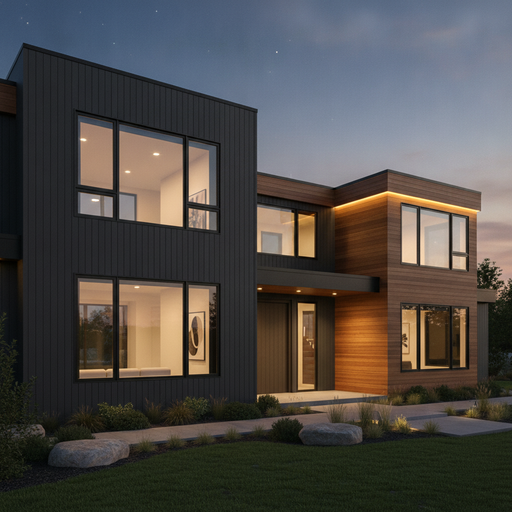
Another popular combination is wood and metal. Using warm cedar planks as an accent on a porch or around a large window, paired with dark corrugated metal siding on the rest of the structure, gives a home an “industrial chic” or “modern mountain” feel. The key is balance; you want the materials to complement each other rather than compete for attention.
2. Vertical Revolution: The Modern Board and Batten
For decades, horizontal siding was the standard. It was safe, familiar, and easy to install. However, homeowners are now rediscovering the power of verticality. Vertical siding, specifically the “Board and Batten” style, has seen a massive resurgence thanks to the modern farmhouse movement.
Traditionally used on barns, Board and Batten consists of wide vertical boards joined by thin strips (battens) that cover the seams. This creates deep shadow lines that add incredible texture to a home. When installed on a residential house, it provides an immediate sense of height and grandeur. If you have a one-story ranch that feels a bit “squat,” switching to vertical siding can trick the eye into thinking the building is much taller than it actually is.
To give this classic look a custom twist, try varying the width of the boards or using a bold, dark color like charcoal or forest green. A dark matte finish on vertical siding creates a sophisticated, moody atmosphere that stands out beautifully against natural greenery.
3. Playing with Patterns: Herringbone and Geometric Shakes
If you want your home to be a true one-of-a-kind masterpiece, think about the pattern of the installation. Most siding is installed in straight, predictable lines. But who says you have to follow the rules?
Custom installers can create stuing focal points by installing siding in a herringbone or chevron pattern. This is particularly effective in gables or on accent walls. While it requires more precision and labor, the result is a textile-like appearance that adds a layer of luxury and craftsmanship to the exterior.
Shingles and shakes also offer an opportunity for pattern play. Instead of the standard straight-edge shingle, consider staggered-edge shakes for a rustic, hand-hewn look. You can even mix different shapes—such as scalloped “fish scale” shingles with square shakes—to create a Victorian-inspired whimsical aesthetic. These small details are what separate a “renovated” house from a “custom-designed” home.
4. The Power of Dark Tones and High Contrast
Color is perhaps the most powerful tool in your custom siding arsenal. For a long time, homeowners were afraid of dark colors, fearing they would fade or absorb too much heat. However, modern siding technologies (especially in fiber cement and treated wood) have made dark palettes more durable and energy-efficient than ever.
A “blacked-out” house—where the siding, trim, and window frames are all various shades of black or very dark gray—is a bold statement in modern architecture. It allows the shape of the house to take center stage and creates a stuing backdrop for landscaping. If a fully dark exterior feels too intimidating, try a high-contrast look. Pair white board and batten siding with black window frames and a natural wood front door. This “panda” color scheme is timeless, clean, and incredibly photogenic.
5. Sustainable and Reclaimed Beauty
For many homeowners, “custom” also means “conscious.” Using sustainable materials is a fantastic way to give your home a unique story while being kind to the planet. Reclaimed wood siding, salvaged from old barns or factories, brings a level of character that new wood simply caot replicate. Each plank has a history, marked by knots, nail holes, and a natural weathered patina.
If the maintenance of real wood is a concern, consider thermally modified wood. This is a process where wood is heated to high temperatures in an oxygen-free environment, changing its molecular structure to make it highly resistant to rot, insects, and warping without the use of toxic chemicals. It ages beautifully into a silver-gray if left untreated, or it can be stained to maintain a rich, warm glow.
6. Functional Accents: Lighting and Trim
A custom siding installation isn’t complete until you consider the “accessories.” Think of your trim and lighting as the jewelry for your home’s new outfit. Instead of standard white vinyl trim, why not use oversized mitered corners for a seamless look? Or perhaps use metal flashing in a contrasting copper or brass finish to highlight the transition between different siding materials?
Integrated lighting is another game-changer. Custom siding allows you to hide wiring for LED strip lights or recessed puck lights that wash down the walls. When the sun goes down, these lights catch the textures of your new siding—whether it’s the grain of the wood or the shadow lines of the battens—turning your home into a glowing sculpture in the neighborhood.
Conclusion: Your Home, Your Masterpiece
At the end of the day, custom exterior siding installation is an investment in your home’s value, but more importantly, it is an investment in your quality of life. Like Sarah and David, you have the opportunity to take a structure made of wood and nails and turn it into a reflection of who you are.
Don’t be afraid to step outside the comfort zone of traditional lap siding. Experiment with vertical lines, mix your materials, play with dark and moody colors, and pay attention to the small details in the patterns and trim. Your home is the stage upon which your life unfolds; make sure the backdrop is as beautiful as the memories you are creating inside. When you choose a custom approach, you aren’t just protecting your house—you are finally bringing it home.